
Tags
alzheimers, Alzheimers advocacy, alzheimers disease research semi postal stamp, alzheimers funding, dementia, stamp out alzheimers
 07.19.15 IMPORTANT UPDATE: The Alzheimer’s Disease Semipostal Stamp has been reintroduced as part of the Alzheimer’s Action Act. If passed, this would allow for the voluntary purchase of a stamp that would raise funds for critically needed research. Please write or call YOUR representatives and urge them to Help Stamp OUT Alzheimer’s by co-sponsoring HR 3092!
If your life hasn’t yet been directly impacted by Alzheimer’s disease, consider yourself very fortunate. If you have been touched by Alzheimer’s or another form of dementia, you know how critical it is that we explore every possible avenue in our quest to end these horrific diseases.
Wouldn’t it be fantastic if there were a way to procure additional funding for Alzheimer’s research without increasing taxes, discretionary spending, or the federal deficit? What if I told you there is a way to do just that?
What is a Semipostal Stamp?
Simply put, a semipostal stamp is a fundraising stamp. Postal customers have the option of purchasing these stamps in lieu of regular First-Class stamps, at a slightly higher cost, and the additional revenue is used to raise money for a specific purpose. Semipostal stamps provide an easy and relatively inexpensive way for people to show their support for a given organization or cause.
 In 1998, the Breast Cancer Research stamp was issued as the first semipostal in United States history. Since then, it has raised over $77.6 million to further breast cancer research. That’s almost $80 million from the sale of a tiny little postage stamp – pretty phenomenal, isn’t it?
So, the obvious question seems to be, why don’t we have an Alzheimer’s semipostal to fund research? Ask Kathy Siggins and Lynda Everman and they will tell you it certainly isn’t due to lack of trying! These two ladies have spent countless hours campaigning to make it happen…
Kathy’s Story
Kathy Siggins knows Alzheimer’s all too well. Her husband, Gene, was just 57 when she began noticing small changes that worried her.
 “My late husband began showing signs of needing more direction when driving to familiar places. Forgetfulness and repetitive questions followed. He always took care of our finances in a timely manner, however, as he began to struggle and wanted no help, our arguments intensified,” explains Kathy.
In 1988, dementia forced Gene into early retirement, and during the course of his illness, Kathy became a determined advocate. She began sharing their story in 1997, and when Gene died two years later, her passion and resolve grew even stronger. With that came an intense desire to raise awareness and help find a cure. Like so many grieving caregivers, she was lost, and in many ways, it was advocacy work that helped her find her way.
Lynda’s Story
Lynda Everman has spent most of her adult life as a caregiver. Her journey began almost 20 years ago when her father began showing signs of dementia. Just a few years later, her husband, Richard, was diagnosed with mild cognitive impairment (MCI) at age 57.
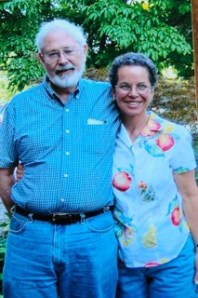 “We were told the conversion of MCI to Alzheimer’s disease could occur in as little as three or as many as six years. In Richard’s case, it was 12 years. As the years passed, I began to believe that we had beat Alzheimer’s disease, that we had arrested its course, and that we would live out our lives with inconvenience and infrequent atrocity, but not the deep and pervasive sadness of constant loss that is dementia. But I was wrong. We were no match for Alzheimer’s disease. No one is,” says Lynda.
Lynda and Richard shared what she describes as “an unshakable belief in the power of the individual to make a difference and affect positive change.” As the disease progressed, Lynda’s determination flourished, and she began to speak out about their experience. Soon she was attending town hall meetings and advocacy trips to her state capital.
Birth of an Idea
Just eight months after losing her husband, Kathy was attending an advocacy seminar when she first heard about the Breast Cancer Research stamp; up to that point, Kathy hadn’t been aware of the semipostal program. Now that she knew about it, if there was a possibility for an Alzheimer’s stamp, she had to make it happen. She reached out to her contacts at the USPS, and with that, her quest for an Alzheimer’s semipostal began.
 In the summer of 2000, President Clinton signed the Semipostal Authorization Act into law, which gave the USPS the authority to issue more semipostals. When an RFP was issued looking for candidates, Kathy was ready. Her proposal included almost 12,000 signatures along with letters from the Department of Health and Human Services, the Alzheimer’s Association, and the National Association of Retired Federal Employees.
Kathy explains, “On September 7, 2001, I visited the offices of Senator Barbara Mikulski and Rep. Edward Markey. Each office presented me with a copy of the letter they had sent under separate cover to the USPS in support of my proposal. Sixteen members of the Congressional Task Force signed the letter from Rep. Markey.”
Less than two weeks after the RFP submission deadline, the tragic events of 9/11 took place and the semipostal program was temporarily suspended.
Ultimately, the program was cancelled, and today, Kathy’s proposal remains pending with the USPS. When the Citizen’s Stamp Advisory Committee told Kathy there wasn’t enough interest for an Alzheimer’s stamp, she set out to prove them wrong. Before it was all said and done, over 84,000 signatures had been collected.
 By 2008, Kathy’s efforts and those of several key players in Washington had generated enough interest for the USPS to issue the short-lived Alzheimer’s Awareness Commemorative Stamp. Unfortunately, it went no further.
Meeting of the Minds
Meanwhile, Lynda had started her own semipostal campaign. Unaware of Kathy’s work, Lynda wrote letters to all of the living Presidents and First Ladies and anyone else she thought might have the influence needed to get the job done.
One day in 2012, while searching the Internet for information on the Alzheimer’s Awareness Commemorative Stamp, she ran across Kathy’s name for the first time. The two women with a shared passion first connected on Facebook and became fast friends.
Continuing their crusade, the passionate, persistent pair has written and hand delivered letters to every member of Congress asking them to co-sponsor the Alzheimer’s Disease Research Semipostal Stamp (S.1091/H.R. 1508).
Kathy explains that for the first time, the legislation has now been introduced as a bill, which carries more weight than a resolution. The groundwork has been laid, but more effort is needed to convince Washington how important passage is. And that, my friends, is where we come in!
Raise Your Voice
 Kathy and Lynda suggest the best way to get involved is to call the US Capitol Switchboard.
It’s easy. Follow these steps:
1. Call the U.S. Capitol Switchboard at 202-224-3121 and ask to be put through to the offices of your two Senators and Representative.
If you don’t know the names of your representatives, you can get that information, as well as the direct line to their offices, by visiting: http://www.contactingthecongress.org.
2. Once you reach each lawmaker’s office, ask to speak with the Health Legislative Aide. Be certain to let him or her know you are a constituent, as they often track the issues most important to their voters. Tell the staffer how strongly you feel about H.R.1508 (House) and S.1091 (Senate), and ask for the representative’s co-sponsorship.
 Passage of this legislation will boost awareness for Alzheimer’s and related forms of dementia, and most importantly, will help fund the research that is so vital. The time is now! In 2013, over 5.4 million Americans are living with these illnesses, and that number expected to jump to almost 14 million by 2050. We simply can’t afford to wait.
Kathy and Lynda remind us that our action will encourage additional co-sponsors to get behind the Alzheimer’s semipostal. This is our chance; without the necessary support, the proposed legislation will die in committee, never making it to the floor for a vote. The clock is ticking…

 Dear Friends….
 The budget cuts also mean that fewer research scientists are being trained – we’ve already lost one out of every ten MD-PhD training slots due to sequestration.3
 The Long and Winding Road...