 For some reason, when I see the word Snoezelen, I think one of my favorite Sesame Street characters, the adorable Mr. Snuffleupagus. Of course, the two aren’t even remotely related, but for some reason I can’t get the image of that adorable woolly mammoth out of my head!
Why Snoezelen?
The term itself is derived from the Dutch words “snuffelen” (sniffing) and “doezelen” (dozing). Snoezelen originated in the Netherlands as a way compensate for sensory deprivation in the profoundly disabled. One study suggests that the average healthy person touches up to 300 different surfaces every 30 minutes, whereas a person with a severe disability will often touch less than ten surfaces in the same amount of time.
In the 1960’s and 1970’s, researchers found that in the absence of adequate stimulation, the brain begins to hallucinate to make up for what’s missing. Subsequent studies, including one led by Dr. Jason A. Staal, at Beth Israel Medical Center in NYC, have proven that augmenting the environment with various sensory stimuli can actually reduce agitation, depression, and apathy in patients.
How Does It Work?
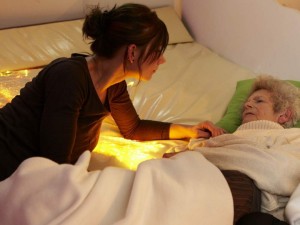
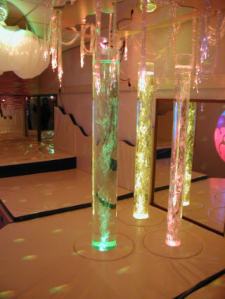
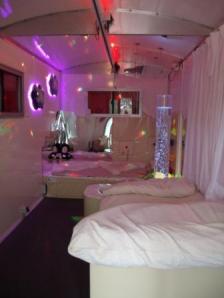 In Snoezelen therapy, multi-sensory environments are created using visual, auditory, tactile, and aromatherapy stimulation. The concept has been successful with people of all ages, and in this safe, comfortable setting, Alzheimer’s and dementia patients have found peace and solace. The “treatment” can elicit calmness, an overall feeling of wellbeing, and a sense of security. In some cases, memories are awakened through the process.
Depending on how they are used, light, sound, and scents can evoke a variety of responses, and there is a risk of overstimulation. For this reason, when creating a “Snoezelen room,” it’s important to tailor the setting to each individual’s unique needs. Ideally, patients should be presented with a variety of options and have the freedom to choose the sensory experiences they find most pleasing.
Case Study
In a 2011 interview, Angela Green of Christian Care Centers in Mesquite, Texas, discussed the success they’ve had with Snoezelen rooms in their Alzheimer’s/Memory Care unit.
“The agitated individual that’s not able to communicate verbally [and] that has a lot of frustration from the stimulation they’re receiving will go into the Snoezelen room and find peace and to relax and enjoyment… We found that the colors and the sound and the motion and the touch that they’re able to experience, all of those things involve all of their senses and give them a complete enjoyment of their surroundings and something to interact with. It’s not uncommon to see one laughing or dancing when they’re in the environment, and even having good memory recall to the point that they can answer questions.”
 Snoezelen and Alzheimer’s
I don’t know about you, but this is something I would have jumped at the opportunity to try with my mom. The obvious question: Why aren’t we hearing more about alternative treatments like this here in the United States? We all agree that research is critical, but we also owe the best quality of life possible to those who are living with Alzheimer’s right now, don’t we??
I could rattle off the litany drugs that Mom’s neurologist prescribed during the course of her illness – everything from citalopram for depression to heavy-duty psych drugs like Risperidone, Divalproex (Depakote), Olanzapine (Zyprexa), and Lorazepam (Ativan)… and the list goes on.
The last couple of years, the psychotropic drugs rarely eased her agony and terror. I have to wonder if something like Snoezelen therapy could have helped to calm and relax her during those horrible spells. Mom is gone now, so I’ll never know – but it’s certainly something other families should have the option of considering…
For more information on Snoezelen and Multi-Sensory Environments, consider visiting these sites:
Photo credit: WorldWideSnoezelen.com

 Just a couple of tidbits that may be of interest…

 The Long and Winding Road...