
Tags
alzheimers, alzheimers activitiies, dementia, dementia activities, dementia art therapy, montessori
 As dementia progresses, it becomes challenging to find activities that encourage mental, emotional, and sensory stimulation. At the same time, we are often in search of ways to connect with our loved one when conversation is no longer an option. Possibilities are as wide and varied as one’s imagination, but here are a few ideas to get you started.
Photographs & Picture Books
My mom enjoyed looking at photos, so I always kept a scrapbook and some photo albums on hand. Later, I added a digital frame that continually scrolled through favorite photographs. Those pictures provided so many smiles, and I have fond memories of sitting next to her on the sofa flipping through the books. It’s impossible to know whether she recognized the people in the pictures – or whether they triggered any memories, but I do know they brought her joy in those moments, and that was the important thing.
Coffee table books full of large colorful images are also a nice option. Think about some of your loved one’s favorite things, and find a book on those topics. Children and animals are always a popular choice, but other potential topics include travel/scenery, cars, food, sports, and many more.
A few examples (all available on Amazon) include:
- Dogs
- Sweet Dreams: Wishes For Our Children
- Journeys of a Lifetime: 500 of the World’s Greatest Trips
- Life: Wonders of The World
- Smitten: A Kitten’s Guide to Happiness
Dolls & Stuffed Animals
There was a woman at Mom’s first assisted living facility that had a profound and lasting impact on me. She had advanced dementia and struggled to speak. The woman was confined to a wheelchair, and every time I saw her, she was holding the same disheveled baby doll.
 It was a poignant sight, and I recall feeling so sad for that woman. At the time, my mom was in the mid/moderate stages of the disease, so thinking of her with a doll wasn’t something I could even comprehend. She would never get to that point…
But, alas, she would and she did, yet when one of the caregivers asked if she could give Mom a doll, I was caught off guard. I remembered that woman from several years back and realized we had now arrived at that place in our journey – a place I never dreamed we’d be.
Mom immediately fell in love with her Dora the Explorer doll. The initial discomfort I felt dissipated instantly as I watched my mom’s genuine, heartwarming interactions with Dora. I was continually astounded at the delight and enjoyment the doll brought.
Dolls and stuffed animals allow our loved ones the unique opportunity to give care instead of receiving it. They also offer a distraction while providing positive sensory stimulation and they can even trigger memories. While there are expensive life-like therapy dolls on the market, in my experience, a regular doll works just as well and costs much less.
Fidget Quilts & Fiddle Boxes
 Fidget quilts use a variety of colors, textures, and objects to keep busy hands occupied. Some quilts feature zippers, buttons, and Velcro, but the possibilities are endless. Many people design quilts around their loved one’s pre-dementia interests.
A “fiddle box” is a similar concept; simply a box (or basket) filled with items that provide a variety of tactile experiences. You might also consider your loved one’s hobbies or interests when putting this together. Ideas: buttons, ribbon, shoelaces, keys, marbles, jewelry, photos, small bits of pipe or safe small hardware items, various size paintbrushes, cookie cutters, measuring spoons.
How about a Busy Hands Fidget Apron or a handyman version for the gentleman in your life? Or if neither one of those strike your fancy, consider a Twiddle Muff or a sensory cushion. The Internet is overflowing with creative ideas, and Pinterest is an excellent starting point.
Art
 According to the folks at Cognitive Dynamics, “Art therapy is the deliberate use of art-making to address psychological and emotional needs. Its benefits include fostering self-expression, enhancing coping skills, managing stress, and strengthening a sense of self. This translates into improved communication, behavior, and cognition.”
When the ability to communicate verbally is gone, art is lovely method of self-expression and creativity. Like music, art brings people together, and it doesn’t require a lot of fancy materials or special skills. Start with some heavy paper or card stock, a basic set of watercolors and a paintbrush, colored pencils or markers – it’s that simple!
Clay is another fantastic way to encourage creativity, interaction, and hand-eye coordination. I recommend good old Play-Doh since it’s brightly colored and more pliable than some of the modeling clay on the market. Combine the clay with a rolling pin and cookie cutters and you’ve created a form of reminiscence therapy for someone who once loved baking cookies!
Puzzles
 My mom loved puzzles; we always had one going during the winter months. However, by the moderate stages of Alzheimer’s, large jigsaw puzzles overwhelmed and frustrated her. I hesitated to buy children’s puzzles, which had fewer (and larger) pieces because the designs were intended for kids. She was declining, no doubt, but still, I was afraid the children’s puzzles might be degrading in her moments of clarity.
Now there are puzzles designed specifically with dementia patients in mind. Max Wallack’s non-profit, Puzzles to Remember has partnered with Springbok to create puzzles with 12 or 36 large pieces that are much easier for Alzheimer’s patients to manipulate. Themes are adult-friendly, colorful, and pleasing to the eye. The puzzles provide a great way to stimulate cognition while offering your person an opportunity to achieve success!
Sorting & Organizing
 Providing a loved one with sorting and organizing tasks is another beneficial way to keep dementia patients engaged and active. On a recent visit to a care facility, I observed one of the residents organizing the newspaper – apparently a daily ritual. Each morning, caregivers take apart the paper and lay the sections out on the kitchen table. With no prompting, the woman sits down and organizes the mess just perfectly, laying each section on top of the one before it about an inch below the last, creating a fan or stair step like pattern.
Consider using brightly colored marbles, several different kinds of fruit, socks, silverware, or various hardware items, such as nuts, screws, and washers. It makes little difference how well these things are sorted; the idea is to keep hands and mind busy, and help your person feel a sense of purpose.
Proponents of the Montessori method for dementia suggest these types of activities can reduce aggression, agitation, and other negative behaviors, improving quality of life.
Follow Their Lead
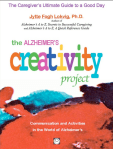 If you’re looking for other ideas, pick up a copy of The Alzheimer’s Creativity Book, by Jytte Lokvig, Ph.D. The book is full of suggestions to get the creative juices flowing, which in turn improves engagement, provides positive reinforcement, and promotes an overall feeling of well being for your loved one.
As you consider activities, remember this is not a “one size fits all” proposition. There are few things more unpredictable than dementia. Depending on the time of day, level of agitation, and mental status, preferences may vary. In fact, some days no activity is the right activity. Most importantly, don’t force the issue. The key is to offer options, then follow your person’s lead. In the process, you’ll create some extraordinarily beautiful moments of joy.
Please consider sharing your own experience or a favorite activity by leaving a comment!
 I’m happy to bring you Part 2 of a 3-part series entitled The Dangerous Dance with Stress and Guilt, by Mara Botonis. Mara is the author of
 There isn’t a magic bullet, or easy answer to help us release the guilt or grief, and I’m not sure we need one. It’s okay to feel your feelings.
 5) Life is a series of these small victories, these shared experiences that connect you both despite the disease. Cherish the times when you laughed, played, shared in something that reminded you of a time before Alzheimer’s. Enjoy any experience where even for only a brief breath of time you were in touch with the life that was lived long before you knew what dementia was. Accumulating more and more
  8) Remember your role in making sure things stay joyful in your home despite the devastating impact of Alzheimer’s and dementia. You are the most significant activity “supply” or care “technique” in this whole process. YOU. Your patience, words of encouragement, soothing and supportive tone of voice and loving reassurances throughout whatever task or activity you choose to do will have a far greater impact on whether or not your loved one has a good day than any item you can ever purchase and can be more effective than a lot of medications out there. Your
 The Long and Winding Road...